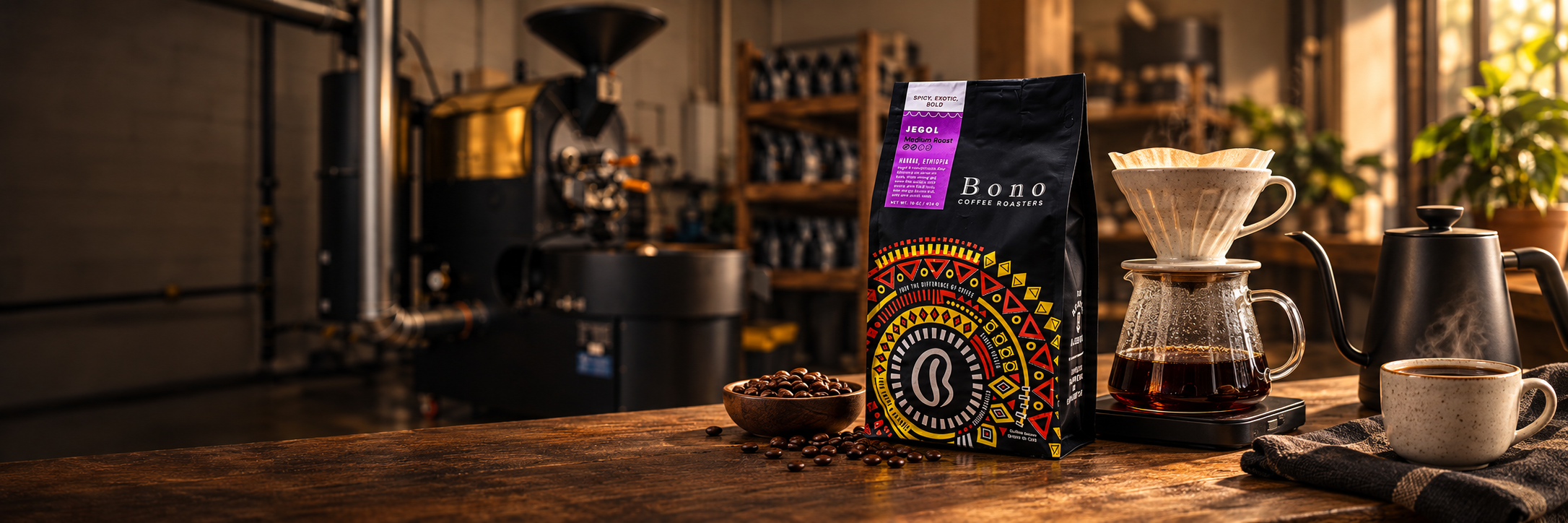
Brew Guide
A good cup starts with a little curiosity.
Great coffee doesn’t stop at the beans, it’s in how you brew them. Whether you’re just getting started or dialing in your daily ritual, these guides will help you get the most out of every cup of Bono Ethiopian coffee at home.
Method 01
Pour Over
Bright, clear, and expressive
The pour over is all about clarity and control, perfect for showing off the bright, fruity notes of Ethiopian coffee. A steady pour and a consistent grind help you bring those flavours into focus.
- Coffee
- 22 g
- Water
- 360 g
- Grind
- Medium
- Temperature
- 92–96°C
- Time
- 3–4 minutes
What you’ll need
Pour-over dripper, matching paper filter, kettle, scale, timer, and a cup or server.
Let’s brew.
Place the filter in your dripper and rinse it with hot water. This warms the brewer and cup, too. Discard the rinse water. Add 22 grams of ground coffee, then gently shake the dripper to spread the grounds evenly.
Start your timer and pour just enough water to wet all the grounds, about 45–50 grams. Let the coffee bloom for 30 seconds. This first pour gives trapped gas time to escape before the main brew.
Pour slowly in small circles over the coffee, working towards 360 grams of water in total, including the bloom. Keep the water level steady and avoid pouring directly down the filter walls.
Let the water drain through. Aim for a total time of three to four minutes from the first pour, then remove the dripper, gently swirl the coffee, and enjoy.
Method 02
AeroPress
Smooth, clean, and easy to make
The AeroPress is quick, forgiving, and great for a smooth, clean cup. This simple upright recipe gives you a repeatable starting point, with room to adjust the strength after brewing.
- Coffee
- 15 g
- Water
- 200 g
- Grind
- Fine to medium
- Temperature
- About 85°C
- Time
- 1 minute steep + slow press
What you’ll need
AeroPress, compatible filter, sturdy mug, kettle, scale, timer, and stirrer.
Let’s brew.
Fit a filter into the cap, rinse it, and attach the cap securely. Place the brewer upright on a sturdy mug. Boil fresh water, then let it cool to around 85°C; use a thermometer or temperature-controlled kettle for consistency.
Add 15 grams of coffee, start your timer, and pour in 200 grams of water. Stir gently for ten seconds so all the grounds are evenly wet.
Insert the plunger just enough to create a seal, without pressing down. Let the coffee steep for one minute.
Press down slowly and steadily, keeping the brewer and mug stable. Do not force the plunger if it resists. Taste your coffee and add a splash of hot water if you prefer a lighter cup.
Method 03
Automatic Drip
A reliable pot for everyday mornings
The drip machine is your reliable everyday brewer. It is an easy way to make a great pot for the whole household, especially when you keep your coffee dose, water, and cleaning routine consistent.
- Coffee
- 1–2 tbsp per 6 fl oz water
- Water
- Fresh, filtered
- Grind
- Medium
- Temperature
- Machine controlled
- Time
- Follow your machine’s cycle
What you’ll need
Drip coffee machine, the correct filter, fresh water, and a measuring spoon or scale.
Let’s brew.
Start with a clean basket and carafe. Fit the filter recommended for your machine and measure fresh, filtered water into the reservoir.
Add one to two tablespoons of medium-ground coffee for every six fluid ounces of water, adjusting to taste. Machine cup markings vary, so check the capacity in your manual rather than assuming one mark equals your mug.
Spread the grounds evenly in the basket and start the brew cycle. Let the machine finish before serving so the whole pot has a more consistent strength.
Gently swirl the carafe before pouring. Rinse the basket and carafe after use, and clean and descale the machine according to its manufacturer’s instructions so old oils and mineral buildup do not affect the flavour.
Method 04
Espresso At Home
Concentrated, rich, and rewarding
Espresso is intense and rewarding. Small changes in grind, dose, and shot time can make a big difference. Begin with a simple recipe, then dial it in by taste.
- Coffee
- 18–20 g
- Yield
- 36–40 g espresso
- Grind
- Fine
- Ratio
- 1:2 coffee to espresso
- Time
- 25–30 seconds
What you’ll need
Espresso machine, suitable double basket, espresso-capable grinder, tamper, scale, and timer.
Let’s brew.
Allow your machine and portafilter to warm up according to the manufacturer’s instructions. Start with a clean, dry basket and choose a dose within its recommended capacity, around 18 to 20 grams for this recipe.
Grind finely, distribute the coffee evenly, and tamp level. Consistent preparation helps water move through the coffee evenly rather than finding an easy path through one part of the puck.
Place your cup on a scale and start the shot and timer together. Aim for about twice your coffee dose in the cup: 18 grams in to 36 grams out, or 20 grams in to 40 grams out, in roughly 25 to 30 seconds.
Stir and taste. If the shot reaches your target weight too quickly, grind a little finer; if it runs too slowly, try coarser. Keep the dose and target yield steady while making small grind adjustments.
Method 05
French Press
Full-bodied, rich, and unhurried
The French press gives you a full-bodied, rich cup. With the coffee steeping directly in water, it is a straightforward way to explore a fuller texture and a slower morning ritual.
- Coffee
- 30 g
- Water
- 500 g
- Grind
- Coarse
- Temperature
- Just off the boil
- Time
- 4 minutes steep
What you’ll need
French press with room for the recipe, kettle, scale, timer, spoon, and cups or a serving carafe.
Let’s brew.
Warm the press with hot water and discard it. Add 30 grams of coarsely ground coffee. Bring fresh water to a boil, then let the active bubbling settle before pouring.
Start your timer and add 500 grams of water, wetting all the coffee. Give it a gentle stir and place the lid on with the plunger raised.
Let the coffee steep for four minutes. Keep the press on a stable surface, then lower the plunger slowly and evenly without forcing it.
Pour all the coffee into cups or a separate carafe straight away. Leaving it in the press keeps it in contact with the grounds and can make later cups taste harsher.
A few good habits, whatever your brewer.
Keep your beans sealed away from heat and light, grind close to brewing when you can, and start with clean equipment. Treat these recipes as starting points. Change one variable at a time and taste your coffee as it cools: your favourite cup is the one worth repeating.
There’s more to the story.
Discover Bono

Let’s find your recipe.
Tell us which coffee and brewer you use. We’d be happy to help you choose a starting point.